

We Are Part of the Whole
Remembering the Earth–Body–Mind Connection
Author: Kelsey Loupy, PhD
There’s something extraordinary about remembering that we are, quite simply, a human body. To be a human body means that we are woven into the greater ecosystem of Earth — not metaphorically, but literally, physiologically, evolutionarily.
As you read this, my invitation to you is to notice what happens inside. Pay attention to your intuitive sensations and tap into what your body has always known.
As Fritz Perls once said, “Lose your mind and come to your senses.”
What It Means to Be a Human Body
Our bodies are made of cells. Cells are the basic units of all organismic life. They are the building blocks of our tissues, organs, and systems.
From this perspective, the truth is simple:
We are alive.
We are biological.
We are nature.
And because all bodily systems depend on one another, none operates in isolation. The nervous system influences the immune system. The hormonal system speaks to the metabolic system. The circulatory system carries signals everywhere. Each is in conversation with the other.

Just like an ecosystem, a healthy internal world relies on diversity and adaptability. Health isn’t about stagnation — quite the opposite. We did not evolve to live in a constant, neutral state. To be biological means we are ever-changing, cycling through our seasons of life. Healthy regulation is, therefore, the dynamic ability of systems to tolerate internal and external changes by functionally shifting states. In other words, health is flow across energetic states in the body-mind.
Earth-Body–Mind Connection
We often use the phrase “body-mind connection,” but in truth, there is no separation between the two. What we call the body–mind is one integrated system of signaling and sensing, moving in both directions simultaneously:
Top-down: the mind influencing the body
Bottom-up: the body influencing the brain
This communication travels through all the different systems: the nervous system, hormones, muscles, breath & nutrient circulation, the microbiome, immune system, and more. This means that whatever affects our consciousness affects our body, and whatever affects our body affects our consciousness.
And yet—to complicate matters more—our body-minds weren’t created in windowless rooms or temperature-controlled homes. They evolved in relationship with the Earth — through sunlight, cold nights, varied food sources, seasonal rhythms, microbial life, and landscapes that changed with the seasons. The biochemistry of our surroundings shaped the way our systems interact with nature, from the beginning.
Because of this, our physiology literally responds to nature. We might also say that our physiology expects a dynamic environment.

Natural environments are inherently stressful, but in the way that builds resilience. We call this eustress — the positive kind of stress that expands our system’s capacity and flexibility. Think of:
heat and cold
intermittent hunger
movement across varied terrain
microbial exposure
sensory diversity
When our physiology is challenged in just the right amount, it allows our systems to adapt to a greater range of environments and stressors. Our bodies become better equipped to regulate. In psychology, we think of this as expanding our window of tolerance. This concept applies to the body-mind as a whole.
After all, this is how our ancestors lived. And when we place our bodies back into natural settings, the old evolutionary wiring wakes up. Even without trying, our systems begin to engage with nature in ways that support our wellbeing.
One caveat here: stress is stress. Physiological and psychological stress manifest in the same way. Too much stress is real and is never a good thing. For example, sometimes a wilderness adventure might be overwhelming, depending on an individual’s current stress level, lifestyle, health, and other contextual factors.
The Five Senses: Pathways Back to Ourselves
Each of our senses offers a way to return to the present moment.
Sight

Sight is often the most dominant of the senses—or at least, the one we pay most attention to. At its foundation, sight gives us important reference to the relative safety of our environment. For example, the color green naturally settles the nervous system, evolutionarily signaling water, springtime, food sources, and abundance. The soft curves and irregular patterns found in nature give our overworked eye muscles a chance to rest — a welcome contrast to the sharp angles and fixed-focus strain of screens. And simply being amidst natural light cycles, even for a short time, helps balance the hormones that guide our sleep cycles and mood.
Sound
The absence of city noise alone allows cortisol levels to drop; our systems no longer have to work to filter out the constant hum of traffic or machinery. In its place, running water offers a primal reassurance — an ancient cue that resources are nearby. Birdsong, wind moving through branches, and other gentle natural sounds soften the nervous system, helping us shift out of vigilance and reminding us that we are okay, here right now.
Touch
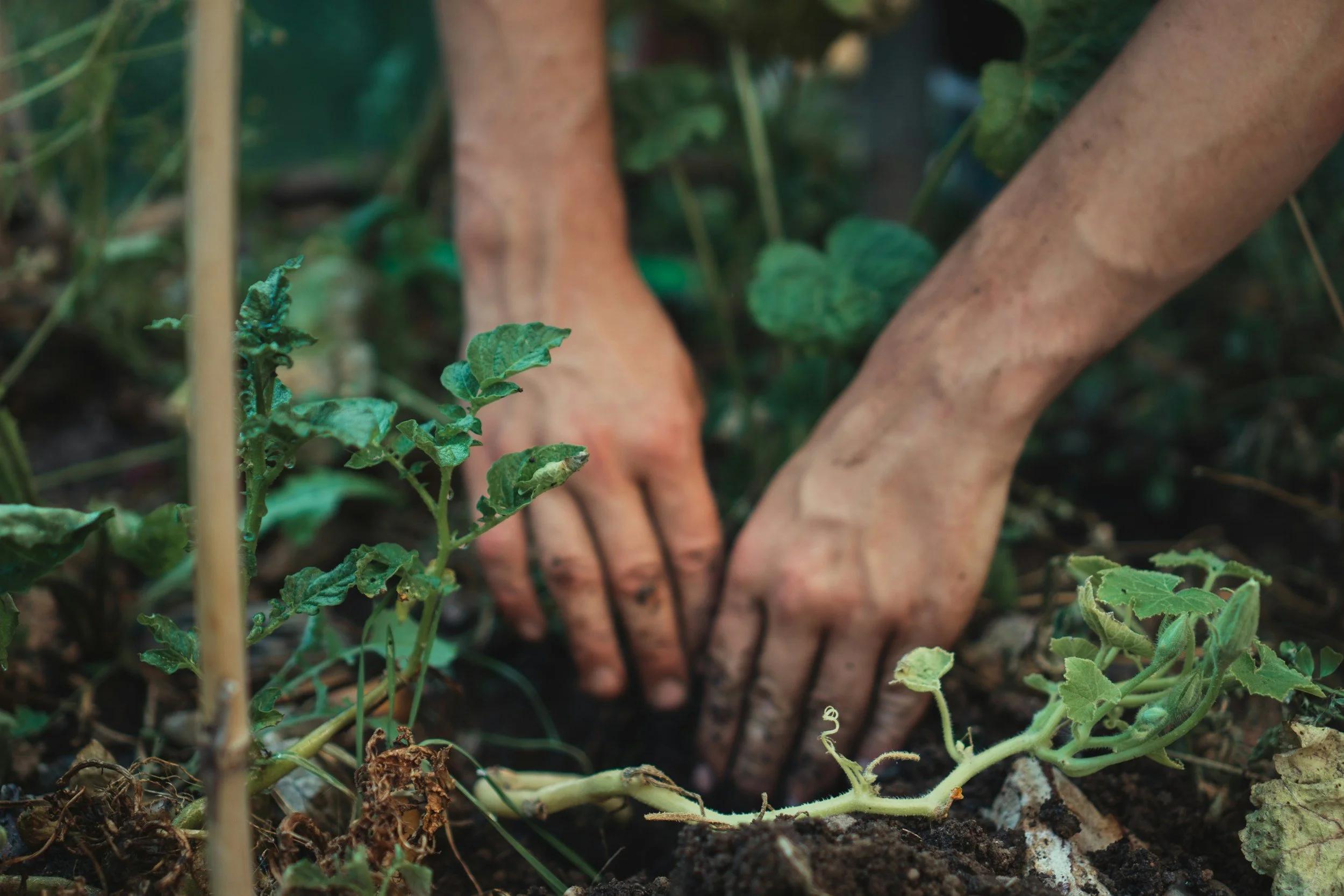
Our skin is both a boundary and a gateway into connection with the living world. Contact with soil introduces us to the microscopic “old friends” that help train and support immune intelligence. Temperature changes — the heat of sunlight or the sting of cold air — activate the same brain regions influenced by antidepressants, reminding the system how to shift between states. And movement itself, whether a slow walk, a stretch, or simply shifting our posture outdoors, touches every physiological system. Through touch, we remember that our bodies are designed to interact with a dynamic, textured world.
Smell
Scent also offers subtle information to our body. Many nature beings release chemical compounds — phytoncides from trees, geosmin from soil after rain, the aromatics of flowers — and our bodies respond. These scents often feel comforting on their own, yet they also create measurable shifts: lowering cortisol, supporting the cardiovascular system, altering brainwave activity, and supporting immune function. A single breath of a forest or the earthy sweetness after rainfall can quietly nudge the body back toward steadiness.
Taste
Taste connects us to the seasons in a profound way. Plants change their chemical composition depending on the conditions they grow in — sunlight, drought, temperature — and when we eat foods in season, those signals become information for our own metabolic systems. This helps regulate hormones, support the gut microbiome, and strengthen immune function. Even the rhythms of intermittent fasting, which our ancestors naturally lived by, can influence our cardiovascular health, brain function, and inflammatory responses. Through taste, we take in the story of the land around us and let it shape our internal world.
If This Work Speaks to You…
As you move through your days, you might notice how easily the natural world finds its way back into your system — a shift in breath as you step outside, the way sunlight softens your mood, the grounding that comes from even a moment of contact with soil, water, or wind. These small moments are reminders of something our bodies never forgot: we belong to a wider living world, and it continues to shape us in ways both subtle and profound. If you feel called to explore these connections more deeply, our nature-based trainings offer a space to learn, sense, and remember alongside others who are curious about the same questions — how the Earth supports our healing, and how we in turn can live in reciprocity with the whole. You can explore more about our trainings here.